.svg)

How Wire Fraud Happens Through Email, and How to Stop It

Alex Nocenti

How Wire Fraud Happens Through Compromised Emails, and How to Prevent It From Happening to You
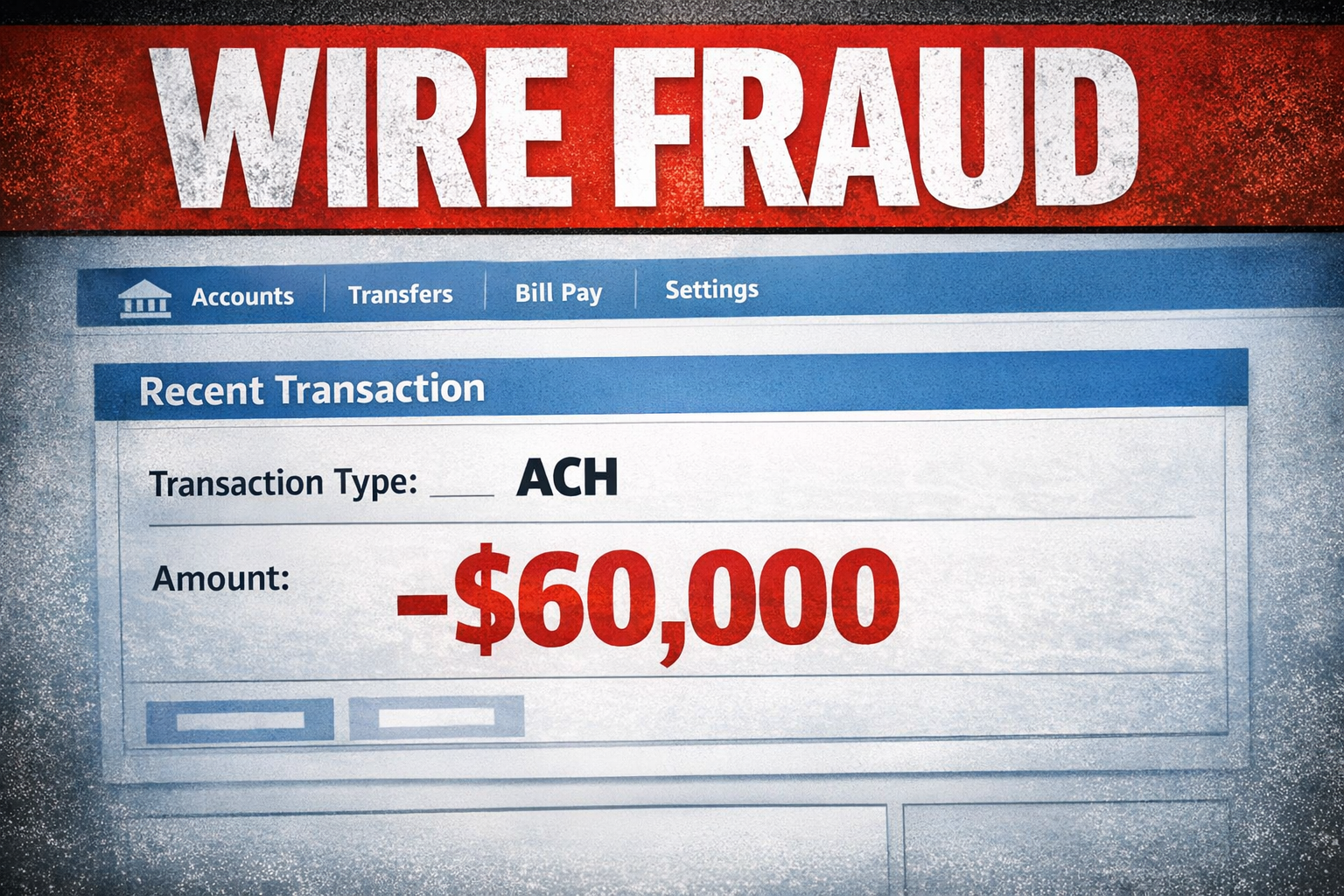
Wire fraud isn't just a “big business” problem. It’s happening every day to small and mid-sized companies, often with devastating financial impact.
The most common method?
Business Email Compromise (BEC).
This isn’t a flashy hack with ransomware or viruses. It’s much quieter, and much more dangerous. It relies on trust, not technology.
What Is a Business Email Compromise (BEC)?
Business Email Compromise starts when a cybercriminal tricks someone into sending money by pretending to be a trusted contact, like a vendor, executive, or partner.
The email looks real. The tone feels familiar. And the request seems legitimate, often coming from common partner's, supplier's, or vendor's legitimate email accounts after they have been hacked by fraudsters.
A seeming regular email comes into accounting, notifying you that the payment information for a supplier you've been working with for decades has changed, and your invoice is past due.
...and then your money dissappears.
These scams often involve:
- Fake invoices with updated payment instructions
- “Urgent” wire transfer requests from a spoofed executive
- Vendor emails asking you to change banking details
In some cases, the attacker doesn’t even hack anything, they simply impersonate someone you already trust. Rather than receiving an email from YourPartnerOrg.com, the email comes from YourPartner0rg.com (notice the 0, rather than the O, known as a "lookalike domain".
In many other cases, while your systems stay perfectly secure, a hacker who has taken control of your vendor or supplier's email account will use the same email you've been communicating with for years to send the fradulent wire or ACH instructions. These situations are particularly dangerous, because the account looks perfectly familiar, and will often pass right through your email security checks, as the sender, after all, IS a legitimate account (albeit, a compromised one).
Why This Type of Fraud Works So Well
BEC attacks are incredibly effective because they target people, not systems.
- Email is inherently trusted in business workflows
- Requests appear routine (paying invoices, updating vendors)
- Employees feel pressure to act quickly
- The differences in fraudulent emails are often subtle
Cybercriminals also take their time. They may study your company, vendor relationships, and even internal communication styles before striking. Often using information they scan glean from the About Us or Staff pages on your company's website, or the LinkedIN profiles of your company's employees.
The Hidden Danger: Lookalike and Spoofed Email Domains
One of the most dangerous tricks used in wire fraud is email impersonation.
Attackers create email addresses or domains that look almost identical to legitimate ones:
vendor@company.com→vendor@companny.comceo@business.com→ceo@business.co
Sometimes it’s just one letter off, or even a visually similar character (like “l” instead of “1”).
Other times, they spoof the sender entirely, making the email appear like it came from a real address even though it didn’t. You may see an email from John Smith, a common contact you work closely with, but rather than JohnSmith@YourPartner.com, the email is sent from a disposable account, such as John.Smith1983@gmail.com.
To the human eye, and especially on mobile, it can be very difficult to spot.
Why Email Security Tools Still Matter
A layered email security solution is critical.
Modern tools can:
- Detect spoofed or impersonated domains, applying AI logic such as (You often email ABC-Inc.com, but this email comes from ABC-1nc.com, and is therefore suspicious)
- Block known malicious senders
- Flag email from recently created or newly registered domains as suspicious (after all, ABC-Inc.com has been around for 3 decades, so why was ABC-1nc.com registered a week ago...)
- Flag suspicious payment-related language
- Enforce email authentication standards (SPF, DKIM, DMARC)
But here’s the key point:
Technology alone is not enough.
BEC attacks often succeed even when emails pass technical checks, because they exploit human trust and normal business processes.
...So what can YOU do?
The Most Important Control: Verifying Changes Outside of Email
If you take only one thing away from this article, make it this:
Never trust email alone for payment or banking changes.
The single most effective prevention method is out-of-band verification, confirming the request using a different communication method.
Required Best Practice:
Always call a known, trusted phone number to verify:
- New wire instructions
- Changes to bank accounts
- Updated payment details
Not the number in the email.
A number you already have on file.
This one step alone can stop nearly every wire fraud attempt.
Building Simple, Non-Technical Safeguards
You don’t need a security background to prevent wire fraud, you need clear procedures and consistency.
Here are practical controls every business should have:
1. Require Verbal Verification for Changes
- Any request to change payment details must be verified by phone
- No exceptions, even for executives
2. Implement Dual Approval
- One person initiates the payment
- A second person approves it
3. Slow Down “Urgent” Requests
Fraudsters rely on urgency:
- “We need this sent ASAP”
- “I’m in a meeting, just handle it”
- "Your orders will be suspended until payment is received!"
Train your team to pause and verify.
4. Watch for Red Flags
Send this article to your staff for awairness, and train them to question:
- Slightly different email domains
- Changes in bank details for known vendors
- Unusual tone or grammar
- Requests outside normal processes
5. Document a Payment Verification Policy
Make it official:
- Written procedures for verifying requests
- Defined approval thresholds
- Clear escalation paths
6. Limit Who Can Change Payment Info
Not everyone should have authority to:
- Update vendor bank details
- Initiate high-value wire transfers
This reduces risk exposure significantly.
The Reality: Wire Fraud Is Hard to Undo
One of the biggest challenges with wire fraud is how fast money disappears.
Once sent:
- Funds are often withdrawn or transferred quickly
- Nearly always the funds end up in a foreign bank account
- Recovery is difficult or impossible. That money is gone.
That’s why prevention, not response, is critical.
Final Thoughts: Trust, But Verify
Wire fraud doesn’t always require advanced hacking.
It requires someone to trust the wrong email at the wrong time.
The strongest defense is a combination of:
- ✅ Smart email filtering and spoof detection
- ✅ Employee awareness and training
- ✅ Strict verification procedures outside email
If your organization processes payments, receives invoices, or works with vendors, this is one of the highest-impact risks you face today.
Need Help Protecting Your Business?
At ItsUpTime, we help businesses implement both the technical protections and real-world procedures needed to stop wire fraud before it happens.
If you’re unsure whether your current processes would catch a fraudulent request, we can help you test and strengthen them.