.svg)


UPS Battery Failure: The Hidden Cost of Skipping Preventative Maintenance
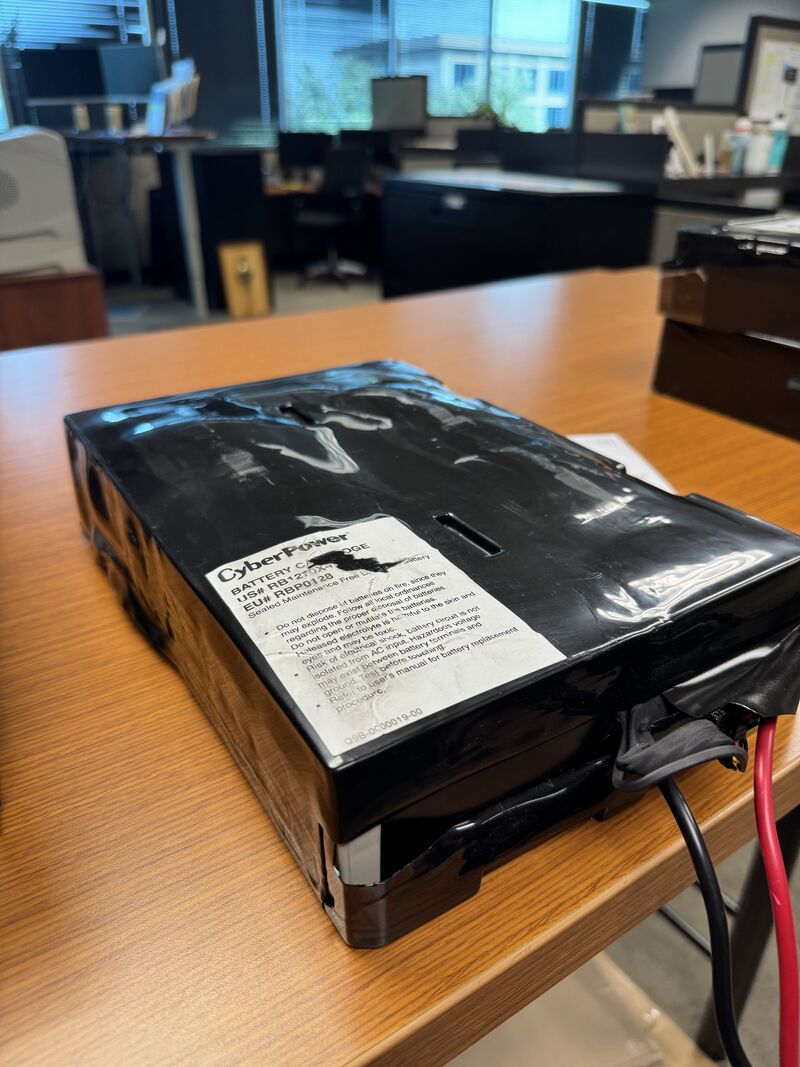
This UPS battery failed because it was never replaced on schedule.
When a UPS battery is allowed to age beyond its service life, it can expand, overheat, and damage the UPS internally. At that point, it’s often no longer a simple battery replacement, it can become a full UPS failure, a fire risk, or an unexpected capital expense that could have been avoided.
What Is a UPS and Why Is It Important?
A UPS (Uninterruptible Power Supply) is a battery‑backed device that keeps critical systems running during short power interruptions and protects sensitive equipment from power fluctuations.
UPS systems commonly protect:
- Servers and workstations
- Network and internet equipment
- Phone systems
- Security and access control systems
Because they sit quietly in the background, UPS devices are easy to forget... until they fail.
Why UPS Battery Failure Matters to Your Business
When a UPS fails unexpectedly, it’s rarely “just an IT issue.”
It can result in:
- Downtime and lost productivity
- Phones or internet going offline
- Data corruption or hardware damage
- Emergency replacement costs instead of planned maintenance
These failures often happen during storms, outages, or peak business hours, when reliable technology matters most.
The Takeaway: Preventative Maintenance Prevents Downtime
Your IT infrastructure has a predictable service life, including UPS batteries.
Routine monitoring and scheduled replacement are some of the lowest‑cost, highest‑value steps you can take to reduce downtime, protect equipment, and avoid surprise expenses.
If you’re not sure which components in your technology stack may be approaching end‑of‑life, now is the time to review them, before they fail unexpectedly.
— ITsUptime
Supporting small businesses across Southeastern Wisconsin